
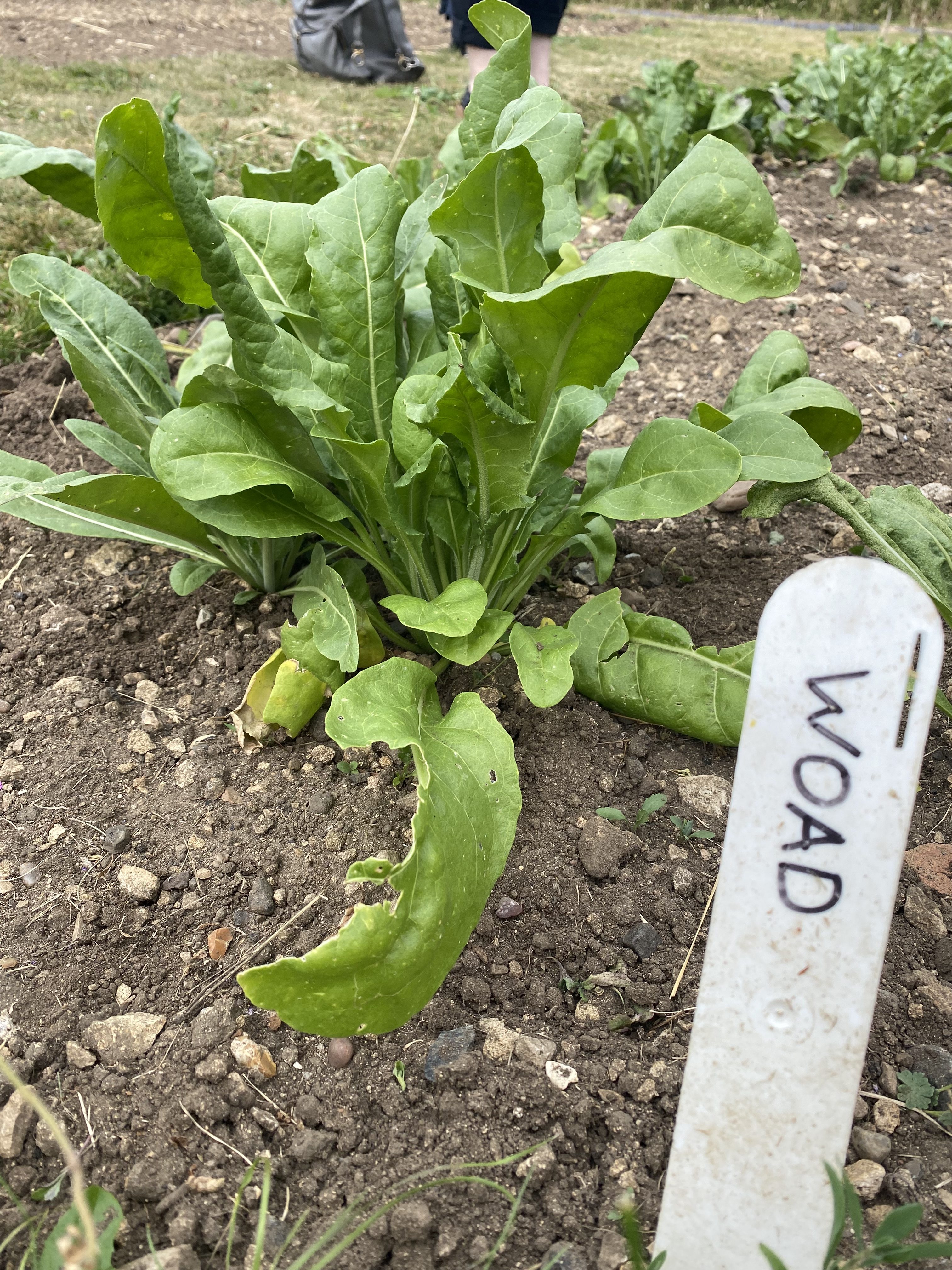
Visited Riseholme Park Campus walled garden and the woad that has been grown there as part of the Woad Futures Group, in which I have become interested and involved since being introduced by Polly Lancaster. There work has many connections to the my research and practice in natural dyes.
Monday, I visited with other members of the group Jim Chesire, Phillipa Mcdonnall, Celeste Sturgeon, Assunta Ruocco and Anna Robinson, and we set about weeding the beds around the woad plants. We were please to see the progress of the plants, noting that some batches had been better than others, but all productive overall.


Seeds had been sourced from four sources:
1. Dyers woad (Tewkesbury strain) from kingsseeds.com.
2. Woad Isatis Tinctoria from justseed.com.
3. Herb woad from Plant World Seeds
4. Seeds taken from woad plants grown by fellow group member Polly Lancaster.
Celeste and I agreed to return the next day, harvest some woad and make a vat for a first harvest dye experiment.


On our return we spoke with Ian Birch, who has kindly been keeping an eye on the progress of the plants, watering and feeding them as needed. He commented that the seeds overwintered well and germination was good given the hard frosts we had.
When we cut the woad to harvest the leaves, leaving the younger part of the plant behind, we noticed the appearance of blue as the cut stem is exposed to the oxygen. This should be a good sign of indigo content.
Back at the conservation lab, where Celeste is based, we began the process of sorting, washing and steeping the leaves in very hot water to make a woad leaf “tea”.


Note: in the interest of a more scientific approach we kept the different batches (from different seed sources) separate so we could feed back to the group how effective each batch had been in producing woad. I suspect with so many variables this is just a rough idea of whether it makes a difference. It certainly made this task more time consuming that it otherwise should be. Making one batch at a time is perfectly adequate and accepting variation in quality is part of my process, although it is useful to note if things make a fundamental difference.