
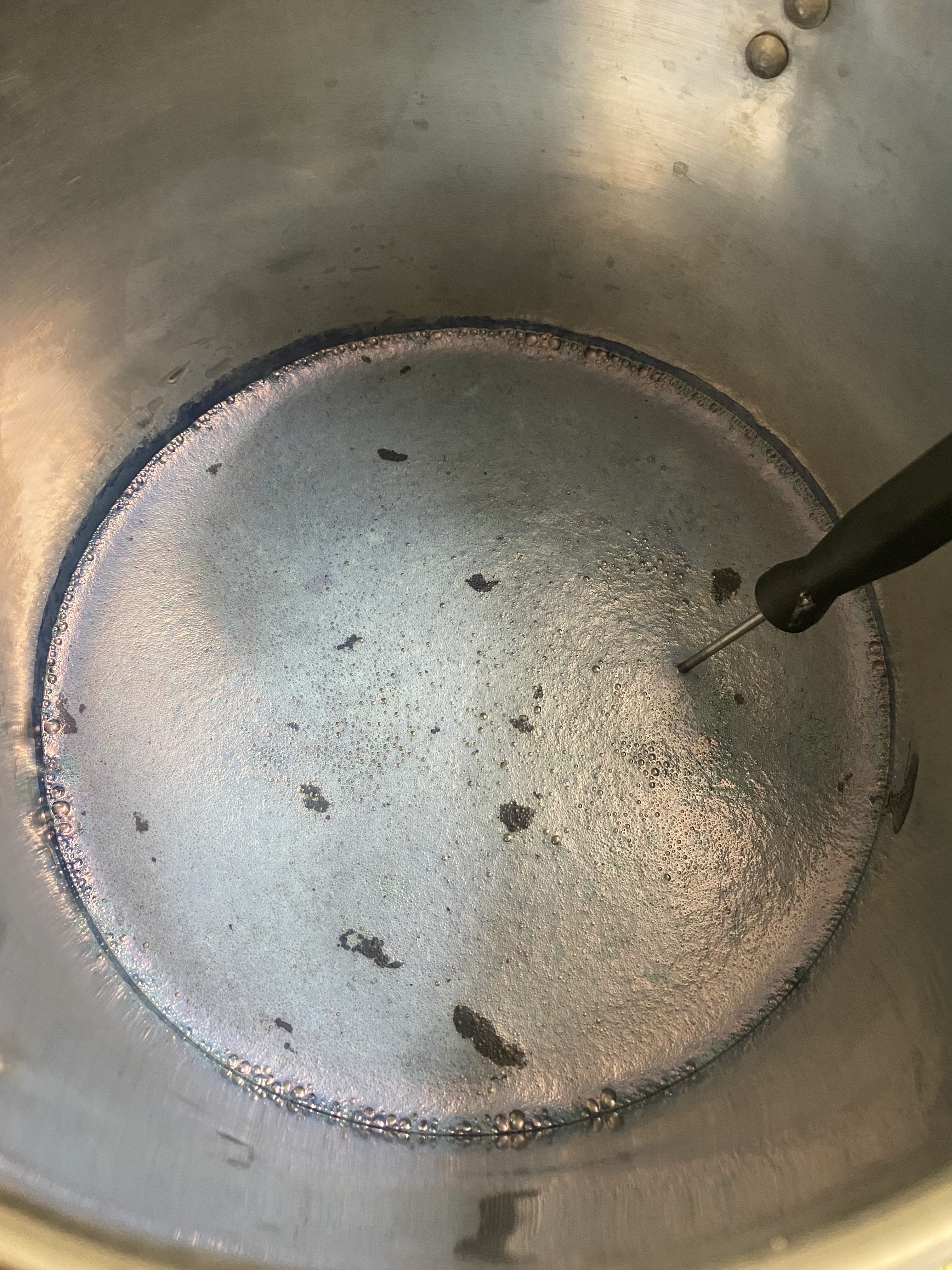
Worked in Studio 27 with Polly Lancaster to make up a woad vat. Using the kit I bought from DT Craft & Design and adapting the instructions for the materials and process I was using, I created a vat as follows:
- Dissolved 4tsp sodium carbonate in 4tbsp of very hot water and allow to cool.
- Add 3tsp (or the entire 10g pot) of woad and mix with the sodium solution until it forms a smooth paste.
- Heat 7 pints of water in a large pan and heat to 40°C (hand-hot), which is the suitable temp for cottons. This is the dye vat.
- Carefully add 4tsp of thiourea dioxide to the dye vat, stirring slowly and gently to avoid intruding air to the water.
- Add the woad paste and stir carefully, again avoiding air bubbles forming.
- Maintain the temperature of the vat at 40°C for 45-60mins using a hotplate.
- After an hour the dye vat should be greeny-yellow. If not – add more thiourea dioxide and wait for a few minutes. Repeat if necessary until the vat is greeny-yellow. If it turns completely yellow introduce some oxygen to the vat.
- Maintain the temperature at around 40°C to dip cellulose fabrics (cotton, linen, etc.) or 50°C for protein fabrics (wool, silk, etc.)
When I returned after lunch, the vat was ready to use, so I gathered the clay printed fabrics and a few extra pieces of unprinted fabrics for dipping, as shown in the video below.
I had been nervous about creating my first vat, worried it would be complicated and I would waste a batch of powdered dye, which isn’t cheap to get hold of. It has certainly made me mindful of growing my own woad so that I can guarantee getting hold of the dye stuff, which is increasingly difficult to find in the UK via suppliers.
The process proved, however, to be much more approachable than I had anticipated, although it is necessary to be organised and have time and space to get the most out of the vat.
The moment of revealing the woad-soaked cloth from the vat was really exciting and, as the room was busy with a lunchtime meeting, pulled a crowd of interested bystanders.
I was pleased that the clay withstood the dipping process in the main. Time will tell if it retains a clear image with enough contrast, or if the clay paste was too thick when applied to fully resist the dye.